I’ll be honest up front: this tank is a bit of a mess right now. It’s my 50.3-gallon Waterbox with a sump, sitting in Commerce City, Colorado, running on our hard Front Range water. It has some real wins, some ongoing headaches, and a layout I already want to redo. Instead of waiting until it looks perfect, I’m writing it up as it is. Consider this the “before” post.
The Setup: 50.3-Gallon Waterbox with a Sump
The tank is a 50.3-gallon Waterbox with a sump underneath. A sump is basically a second tank below the display. Water overflows from the display down into the sump, gets filtered, and a return pump pushes it back up. It’s a great way to hide equipment and add water volume, but it adds plumbing that has to be balanced just right. More on that below, because it’s my biggest problem right now.
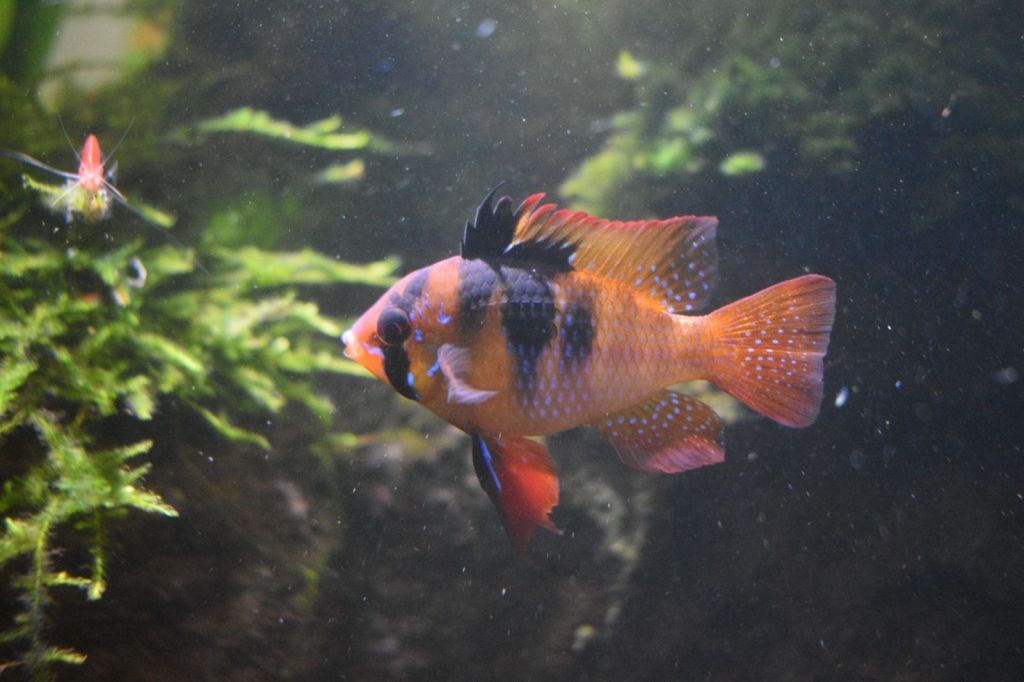
The Hardscape: Lava Rock, Mystery Moss and a Red Tiger Lotus
The main hardscape is lava rock covered in moss. I’d love to tell you exactly which moss it is, but I honestly can’t remember. Whatever it is, it’s grown in well and softens all the sharp edges of the lava rock. Lava rock is porous, which gives moss something to grab onto and provides plenty of surface for beneficial bacteria.
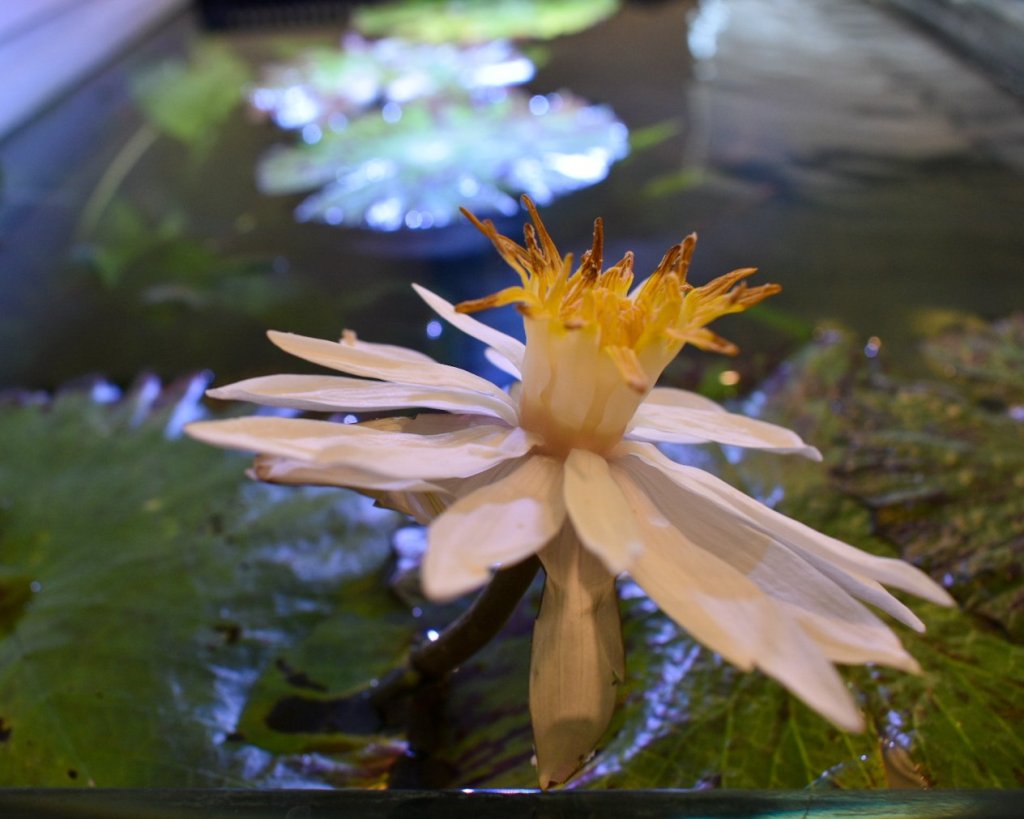
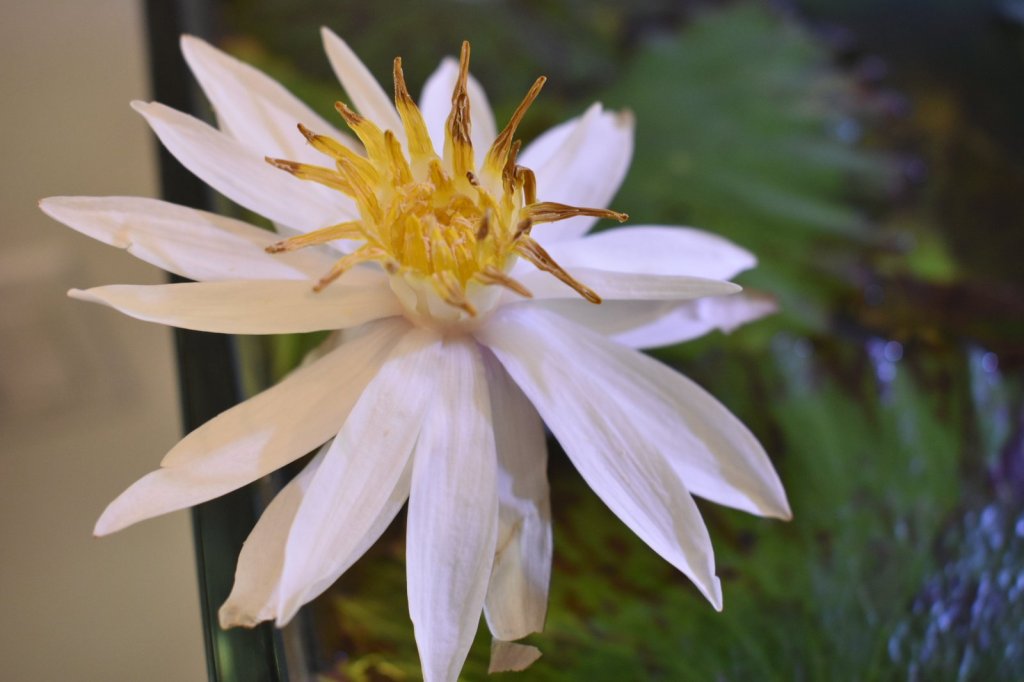
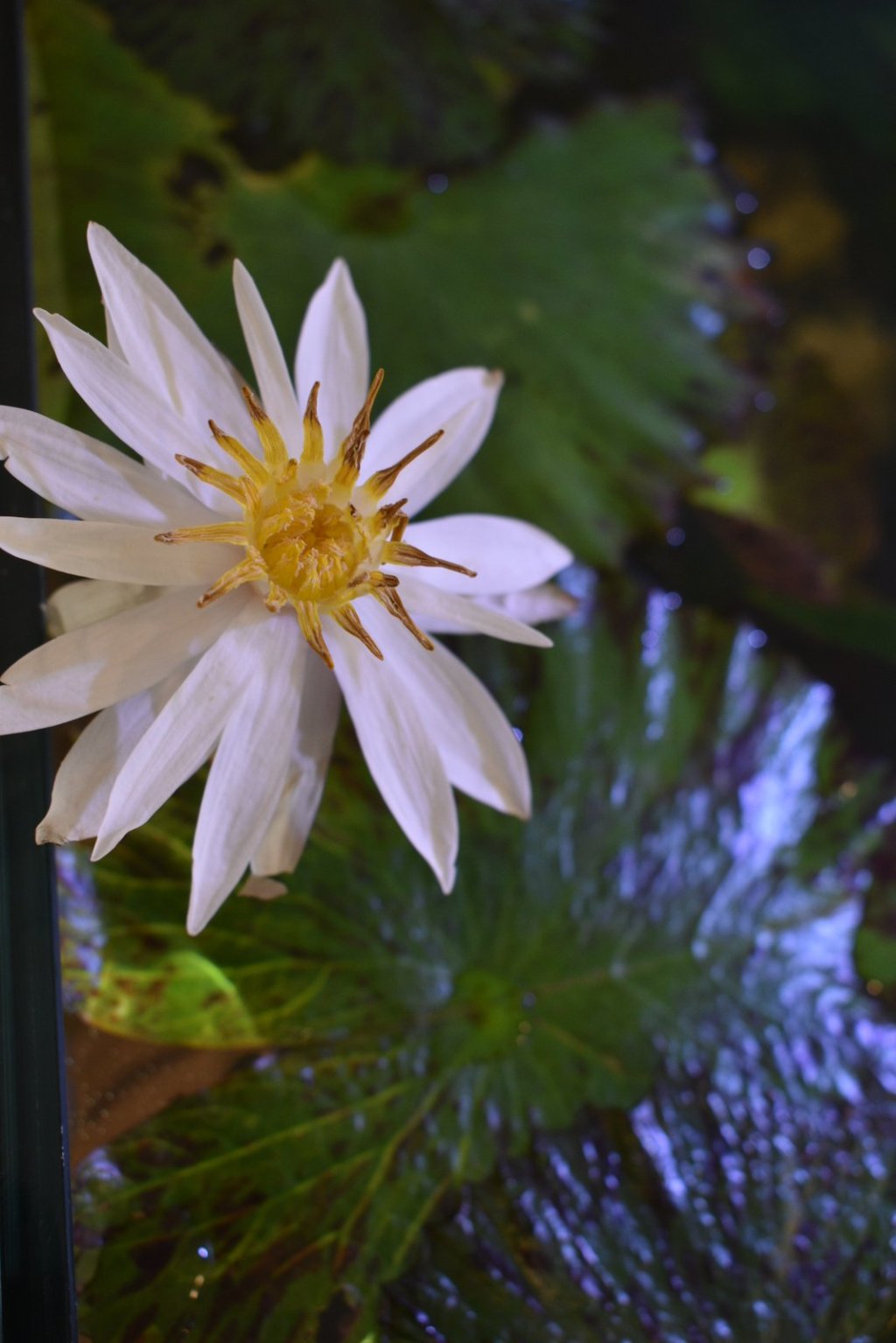
There’s also a red tiger lotus (Nymphaea zenkeri) in the tank, and it’s one of my favorite plants I’ve kept. It has bloomed in the past, which always feels like a small victory in an indoor tank. Here’s what that looked like:
Who Lives Here Right Now
Current stock, as honestly as I can count it:
- One German blue ram. Just one left at the moment.
- About 5 sterbai corydoras.
- A bunch of cherry shrimp. I’ve lost count, which is usually a good sign with shrimp.
- What I believe are 3 clown plecos. Clown plecos are experts at hiding in rock and wood, so I’m going on my best guess here.
The ram is still the star of the tank. German blue rams are small South American dwarf cichlids with ridiculous color. They have a reputation for being sensitive, and they come from soft, acidic water in the wild. Most rams in the hobby are farm-raised, and many people keep them successfully in harder water, as long as conditions stay stable. Rams also like warm water, which is one reason sterbai cories are a common tankmate. They handle warmer temperatures better than many other cories.
I’ve had juvenile rams in this tank before, but I’m not going to pretend there’s a breeding pair in here right now. With one ram left, the breeding experiments are on hold for this tank.
Keeping Rams in Colorado Hard Water
Our water here is hard, full of dissolved minerals. That’s the opposite of where wild rams come from. A lot of ram keepers in hard-water areas fall into two camps. Some use conditioned tap water and focus on keeping it consistent. Others mix in RO (reverse osmosis) water to soften things, especially if they want to breed.
Whichever way you go, the general advice is the same: stability matters more than chasing perfect numbers. Big swings in temperature or water chemistry between water changes stress rams much more than steady, moderately hard water does. Clean water matters too. Rams are often the first fish to show stress when water quality slips.
The Biggest Hurdle: A Sump That Won’t Behave
My biggest ongoing problem is the sump. The return pump is too strong, even on its lowest setting. It pushes water back up to the display faster than the overflow can bring it down. The display tank stays full, but the sump regularly runs low on water.
That’s not a great situation. A sump running low can let the pump run dry or suck in air, and it makes the whole system feel unstable. I’m still working on it. The options I’m considering are the usual ones people use for this:
- Adding a ball valve or gate valve on the return line to throttle the flow down further than the pump allows.
- Swapping to a smaller return pump that’s better matched to what the overflow can actually handle.
I haven’t done either yet. When I do, I’ll write up what worked.
A Layout Mistake I Need to Fix
The other thing I’d do differently: I left a lot of open swimming space at the back of the tank. It sounded like a good idea. In practice, the cories have claimed that back area, and they spend most of their time behind the lava rock where I can’t see them. It’s a little funny that the fish I put in to enjoy watching are the ones I see least.
So the plan is to rework the layout soon. I want to bring the open space forward, or rearrange the rock so the back isn’t such a perfect hiding zone, and give the cories a spot up front where they’ll actually hang out.
What’s Next for This Tank
To sum it up, the to-do list is:
- Get the sump flow under control.
- Rework the hardscape so the cories come out of hiding.
- Keep the ram, cories, shrimp and plecos happy while I make changes.
This tank isn’t a showpiece yet, but it’s a real tank with real problems, and I think that’s more useful to write about than a polished photo. If you’ve solved a too-strong sump return or dealt with hiding cories, I’d genuinely like to hear how.
Follow Along
This is the first of many tank updates on Chaos Aquatics. If you want to see how the sump fix and the rescape turn out, along with breeding notes and hard-water lessons from my other tanks, subscribe to the newsletter at the bottom of this page. You can also follow @ChaosAquatics on X and chaos_aquatics on Instagram for photos (including more lotus blooms) and quick updates between posts.


Leave a Reply